How Urban Green Spaces Transform Cities: The Science Behind Nature’s Healing in Concrete Jungles
How Urban Green Spaces Transform Cities: The Science Behind Nature’s Healing in Concrete Jungles
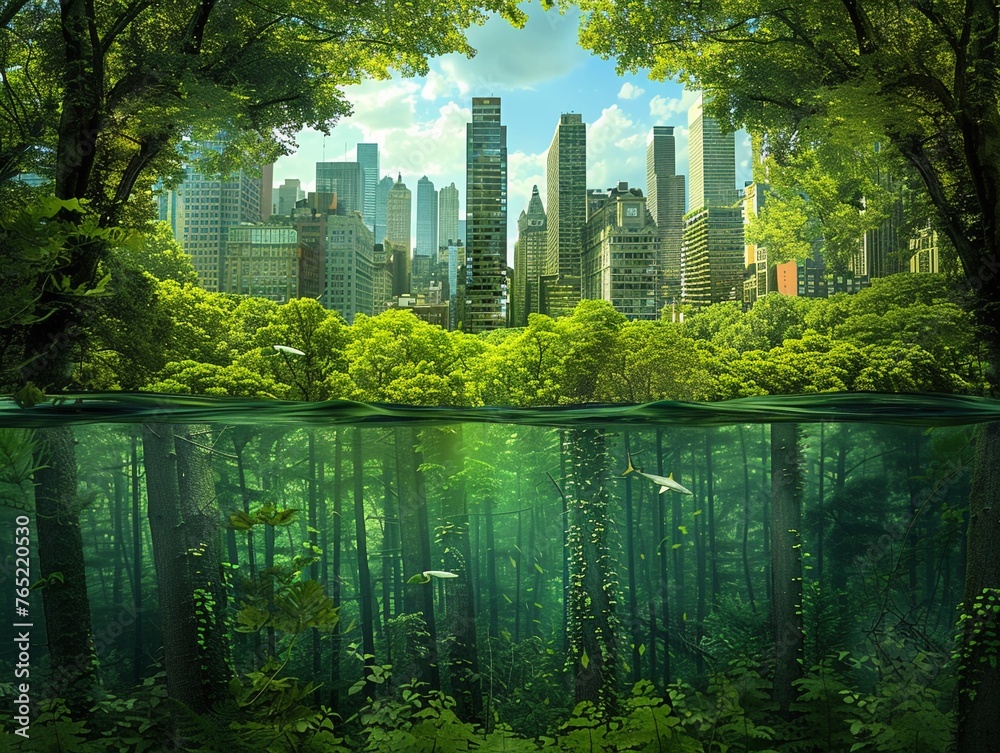
Urban landscapes shaped by steel, glass, and asphalt are no longer purely functional zones of consumption and transit. Today, they are battlegrounds for health, resilience, and ecological balance — and at the forefront of this transformation are urban green spaces. Parks, rooftop gardens, street trees, and community orchards are proving not just to beautify cities, but to restructure them from the inside out.
Science increasingly confirms that nature embedded in urban fabric delivers measurable physical, psychological, and environmental benefits — turning concrete jungles into living, breathing ecosystems. <
Research published in *The Lancet Planetary Health* reveals that access to urban greenery reduces the risk of depression and anxiety by up to 30%, while boosting cognitive performance and physical activity levels. These spaces act as natural stress buffers, with the mere presence of trees and open greenery shown to lower cortisol levels — the body’s primary stress hormone — by measurable amounts. Far beyond mental health, urban greenery plays a critical role in climate adaptation.
Trees and vegetation function as natural coolants through transpiration, effectively lowering local temperatures. A study by the Lawrence Berkeley National Laboratory found that shaded urban areas can be as much as 10°C cooler than unshaded concrete zones during peak summer heat — a crucial advantage in cities where heatwaves increasingly strain infrastructure and human health. Green roofs and walls further extend this cooling effect, reducing building energy consumption and mitigating the urban heat island phenomenon.
<
In Singapore, the “City in a Garden” initiative transforms high-density neighborhoods with vertical greenery, sky gardens, and interconnected park systems, effectively doubling green space per capita while enhancing biodiversity. Key to this transformation is the role of urban forests and tree canopy cover. Research from the University of Minnesota demonstrates that a single mature tree can remove up to 10 pounds of air pollutants annually, including nitrogen dioxide, ozone, and particulate matter — scales of impact that translate into real public health gains across metropolitan areas.
Moreover, green corridors connect fragmented habitats, enabling wildlife movement and supporting urban pollinators, which are essential for food systems and ecosystem stability. <
The psychological benefits extend beyond individual well-being: studies in environmental psychology confirm that well-designed green areas reduce crime rates by encouraging community stewardship and increasing foot traffic. In Medellín, Colombia, the construction of “library parks” has transformed once-violent barrios into vibrant hubs of education, recreation, and civic pride. Beyond social dynamics, green space also serves as a physiological regulator.
Patients with views of greenery from hospital windows recover faster, require less pain medication, and experience shorter stays — outcomes documented in countless clinical studies. Even brief exposure — a 10-minute walk through a tree-lined street — triggers measurable improvements in attention span and mood, as shown by neuroimaging research highlighting greenness’s effect on prefrontal cortex activity. <
Low-income communities and densely built neighborhoods often suffer from “green deserts,” where impervious surfaces dominate and tree cover is sparse. Addressing this disparity demands intentional planning, equity-focused policy, and multi-stakeholder collaboration. Cities worldwide are responding with innovative solutions: vertical forests in Milan, green alleys in Melbourne, and modular parklets in San Francisco.
Smart urban forestry initiatives use GIS mapping to identify underserved zones, while green infrastructure funding mechanisms — including public-private partnerships — help bridge financial gaps. Community-led greening projects further empower residents, fostering ownership and long-term sustainability. <
But those that embrace green space integration are redefining urban success — not by square footage of concrete, but by the health of their ecosystems and people. The science is clear: urban greenery cools cities, cleans air, heals minds, and builds community resilience. In the fight to make metropolitan life more livable, nature is no longer optional — it’s foundational.
Investing in urban green spaces is thus an investment in human and planetary futures. As cities continue to grow, embedding nature into their design isn’t a luxury; it’s a necessity. And in that fusion of science, design, and care lies the blueprint for cities that don’t just survive — but thrive.


Related Post

Luna Briggs-Guzman: Redefining Creativity and Voice in Contemporary Literature

The Future of Fashion Design: How Oliver Elfman Redefines Creativity with Vision and Craftsmanship

Landry Bender Relationship: The Art of Balancing Trust, Transparency, and Tension in Modern Partnerships

Goodnight Babe Images: The Quiet Romance of Stillness in Digital intimacy


